
 01
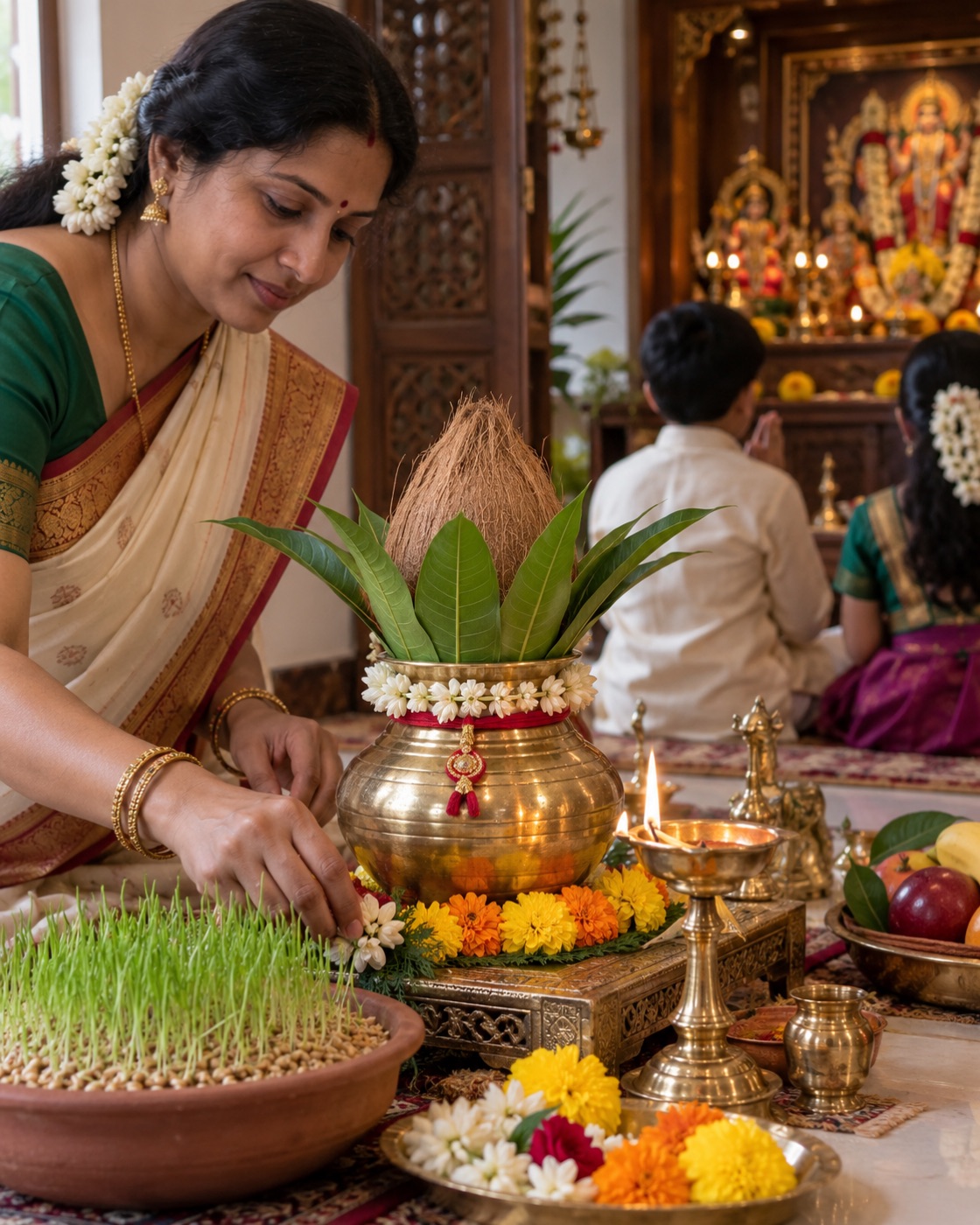
01PRATIPADA · GHATASTHAPANA
Set the intention
Many observances begin with a sankalpa and Ghatasthapana: a kalasha is established and, in some homes, grains are sown. The exact muhurat is taken from the local panchang.
Bengaluru and Mysuru · verified Purohit at your homeBengaluru & Mysuru
Festivals · The nine nights
A thoughtful guide to the nine nights, the rituals families share, and the traditions that make each observance personal.
Sharad Navaratri honours the Devi through prayer, music, family observances and community. There is no single script for every home: customs and dates vary across regions, panchangs and lineages. Here is a gentle guide to moments many families share.
01PRATIPADA · GHATASTHAPANA
Many observances begin with a sankalpa and Ghatasthapana: a kalasha is established and, in some homes, grains are sown. The exact muhurat is taken from the local panchang.
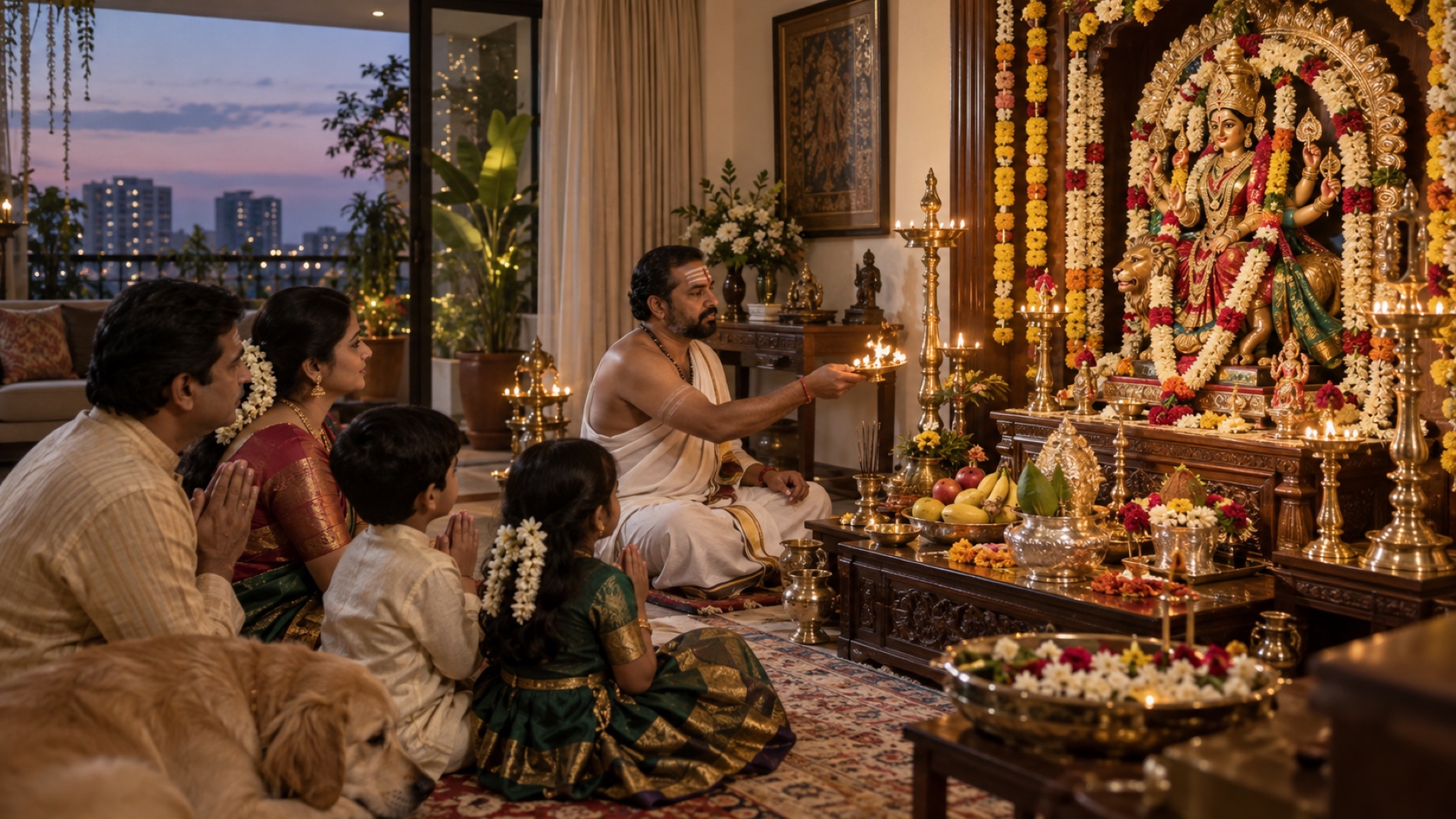
02NINE NIGHTS · DEVI PUJA
Families may offer a lamp, flowers and naivedya, and recite a stotra or perform aarti. Some follow the nine forms of Durga; the form, prayer and offerings are guided by one’s sampradaya and family practice.
 03
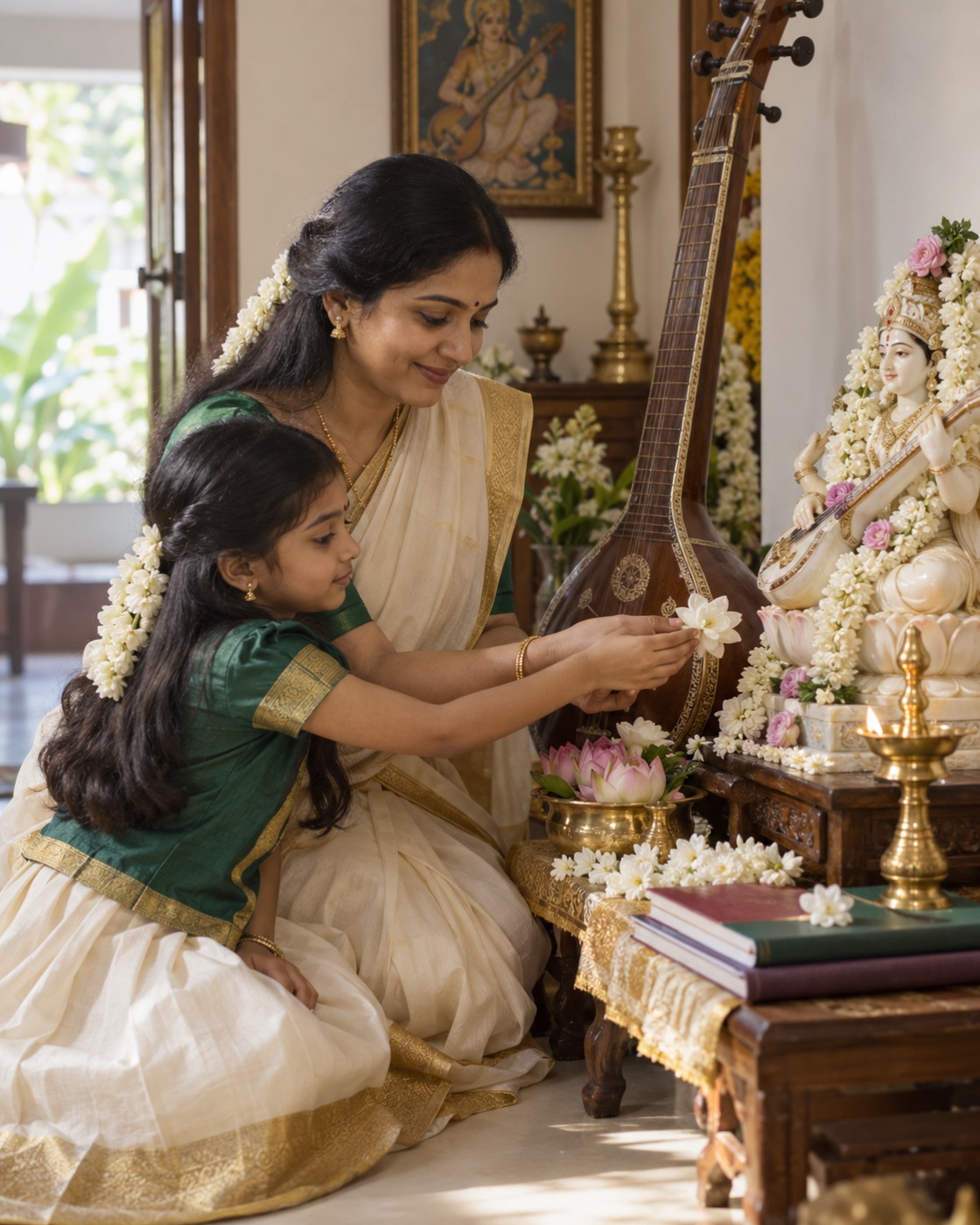
03MAHANAVAMI · SARASWATI & AYUDHA PUJA
In many South Indian traditions, books, instruments and tools are placed for worship. It is a moment to express gratitude for knowledge, craft and the work that supports a household.
 04
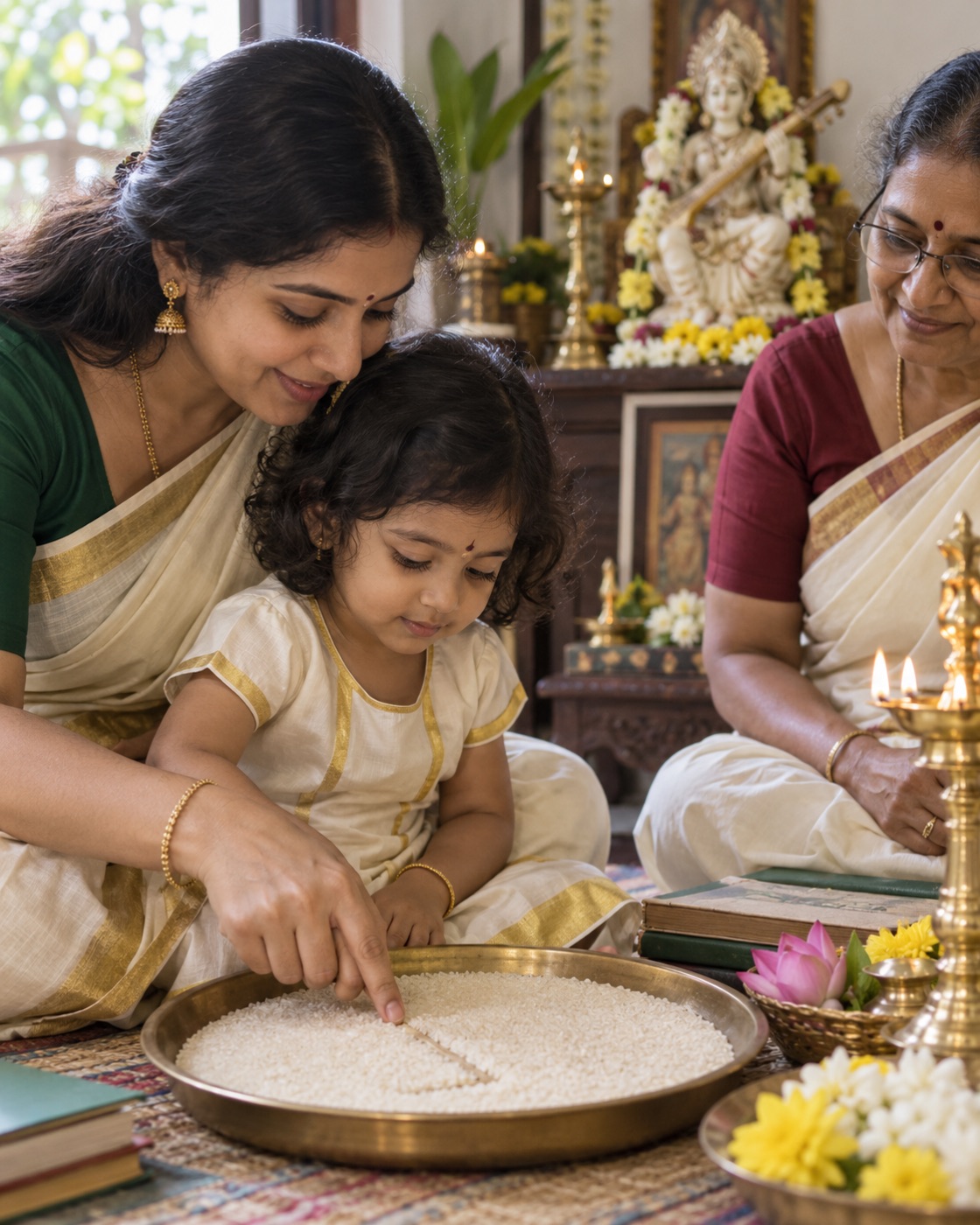
04VIJAYADASHAMI · THE TENTH DAY
The observance closes in different ways across India. Some families begin a child’s learning or another new practice; others mark the day with their own puja, procession or community celebration.
Each night is associated with a form of Durga in this tradition. The nine-form sequence is not followed in every region.
Grounding and devotion
Discipline and resolve
Courage and presence
Creative energy
Care and protection
Strength and purpose
Steadfastness through difficulty
Clarity and renewal
Wholeness and fulfilment
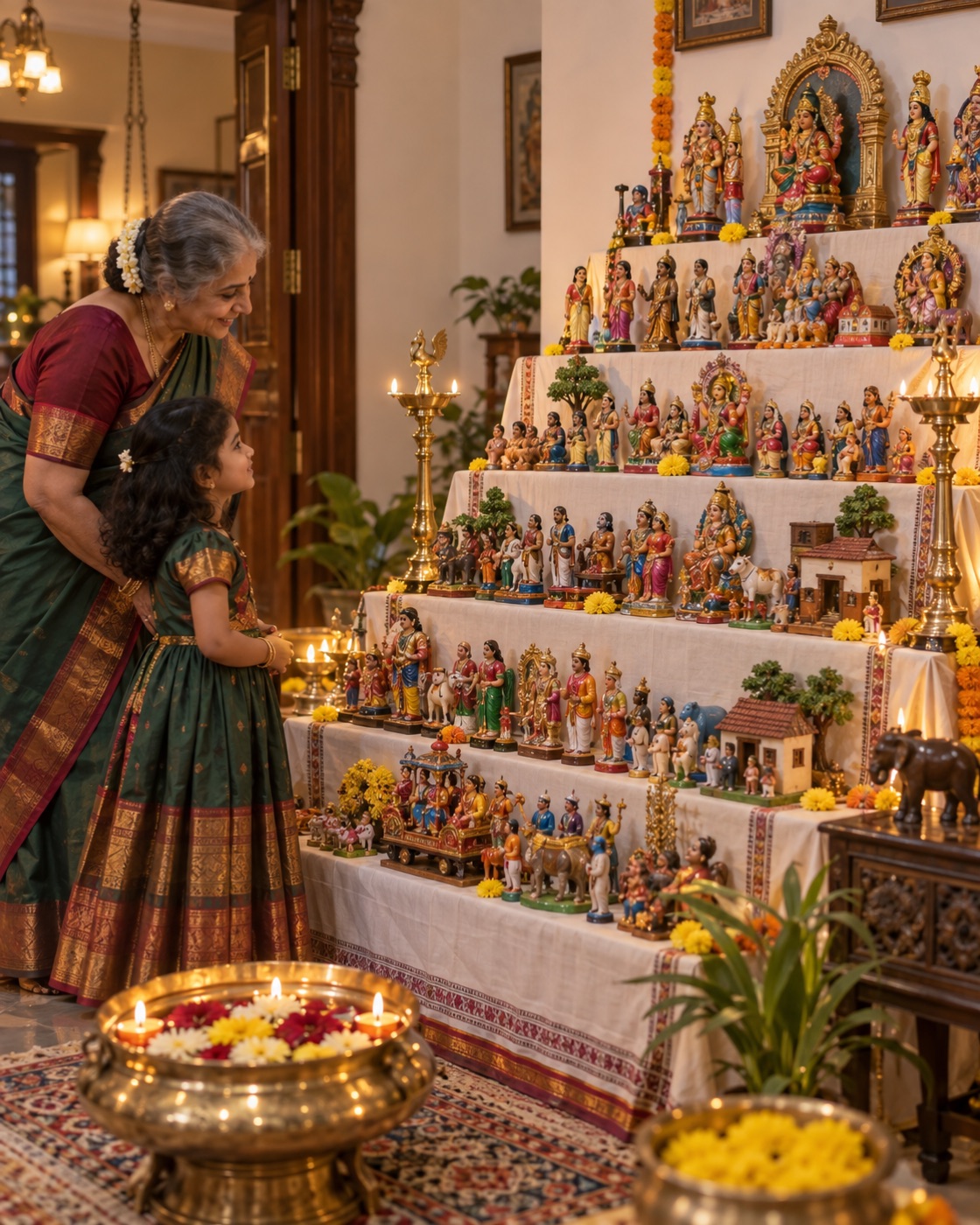
In many Tamil, Kannada and Telugu homes, Golu (also called Bombe Habba or Kolu) brings dolls, deities and scenes from daily life onto stepped displays. Families invite neighbours, sing, share prasadam and tell stories. It is one beautiful way to keep Navaratri; it is not a requirement for every family.
Ask about your family’s sequence and samagri before booking. A Purohit can confirm what is appropriate.
There is not a Navaratri-specific pooja linked in the catalogue for this city yet. Browse festival ceremonies or ask our team to help identify the right ritual for your tradition.
For many, the value is in the practice itself: returning to prayer each day, gathering across generations, and expressing gratitude for learning and livelihood. These are spiritual and cultural intentions, not promised material outcomes.
A lamp, a prayer or aarti can give the day a shared moment of stillness.
Stories, music, Golu and offerings help pass customs between generations.
Saraswati and Ayudha Puja turn attention to knowledge, tools and craft.
Vijayadashami is chosen by many to start learning or a new undertaking.
Ask about the sequence, samagri and muhurat before you decide. Your Purohit can confirm details with you.